This is me, Steve Emig, carving tile in the Nude Bowl, in 1990. Still from my 1990, self-produced BMX freestyle video, The Ultimate Weekend. I couldn't air to save my live, but I loved carving around this pool.
Spots
Baldy Pipe. Kenter School Banks. Golden Gate Park. Pipeline Skatepark. Del Mar Skatepark. The Embarcadero. Angelo's Drive-in. The Dish. The China Banks. The Spot in Redondo Beach. The Huntington Beach Pier. The P.O. Curb. The Jinx Bank. Colossus. The "U." Hidden Valley. The Nude Bowl. Posh rails. Sheep Hills. The Towne Street Ramp. The Brooklyn Banks. Huntington Beach High School. Burnside. FDR. Love Park. El Toro. Whistler/Blackcomb. These are a just few of the BMX, skateboard spots, and one MTB/snowboard spot, that became known, many known worldwide, in the 1980's and 1990's. A few of them are still around today.
As BMX freestyle and skateboarding evolved in the 1980's and 1990's, and especially when street skating and street riding exploded, obscure places, where people rode and skated, started becoming famous in our weird little worlds, thanks to magazine photos, and later, videos. A curb. A banked piece of asphalt or concrete. A ledge. A set of stairs. An empty swimming pool. BMX jumps on an unused piece of somebody else's property. A parking lot. A brick area along the bike path by the beach. Some of these places, that were built for one purpose, but happened to be a cool place to ride or skate, started becoming famous. And not just famous in the neighborhood or town, but nationwide... worldwide.
Wall ride over my sister Cheri's head, the Blues Brothers Wall in Huntington Beach, 1990.
Action sports weren't really sports, much of the time. There were contests in all of them, but the contests were just a small part of these activities. As us 1970's, 1980's and 1990's kids got more and more into actions sports, we started looking at things differently. We started looking at our world differently. I remember one time in the 90's when I was riding in a car with Keith Treanor, John Povah, and John's girlfriend at the time. She was driving us somewhere, and suddenly one of us said, "Whoa, check out that bank!" The girlfriend flipped out, "Stop it!" she scramed, "I'm so fucking tired of hearing you guys get all excited about a curb or a bank or a ledge. It's a fucking bank! So what! So fucking what!" We all shut up and looked at each other, then started laughing, which made her even more pissed off. After of years of riding BMX, and a bit of skating, that's how we saw the world, potential places to ride or skate. Everywhere we went, everywhere we looked, were things we might be able to ride. Action sports change the way we looked at our environment.

Heavily skated bench at "The Ashtray," Murdy Park skatepark, in Huntington Beach, 2021. This was the first free public skatepark built in California in the 1990's, testing the idea to see if public skateparks were a good idea. Luckily for skaters, no one died here, and dozens more free skateparks have been built in California since. #steveemigphotos
The idea of spots started in the surfing world, where they scouted out the best breaks and which swells produced good waves at which places. Some days some breaks were good, other days other surf spots were pumping. That's why Surfline exists now. It was originally a 900 number, telling SoCal surfers where the good waves were. Technology evolved, and now Surfline tells the world where the great swells and waves are going to be. Then came skateboarding in the 1960's, Early skaters looked for smooth concrete or asphalt, and then good asphalt down a hill for slaloms. Then they found banks, ditches, and later empty swimming pools were great places to skate. Early BMXers looked for scraps of land to build jumps. Things just kept evolving. As riding and skating progressed, they looked for different types of places to session. As these sports that weren't really sports grew, surfing, BMX, skating and other spots began to get famous.
We would see a place in a photo that looked fun to ride, and we'd want to travel to go ride there. I rode in a freestyle contest in the town square in Whistler, British Columbia in 1986, when many mountain bike riders still rode single speed bikes. I rode at Golden Gate Park, The Embarcadero, The Spot in Redondo Beach, Pipeline Skatepark, the Huntington Beach Pier Bank and the flatland area under Maxwell's (now Duke's), Magnolia Jumps, The Brooklyn Banks, Sheep Hills when it was new, and The Nude Bowl. I not saying I rode these places well, but I got to ride them. I rode the original Combi Pool at Pipeline Skatepark, and a decade later, I rode the new Combi Pool at the Van's Skatepark in Orange, when bikes were still allowed. For just over 20 years, from 1982 to 2003, I rode my BMX bike for a couple hours or more, nearly every single day. I also got into bouldering, low altitude rock climbing, without ropes, in the 1990's, and spent many hours at Stony Point in Chatsworth, The Beach in Corona Del Mar, and the Anarchy Wall in Huntington Beach, as well. Then I became a taxi driver, got fat, and got sidetracked away from action sports.

Chris Lashua (back) and Eddie Fiola, practicing wedge ramps stalls in Whistler, British Columbia in 1986. They were doing shows in Vancouver, and heard there was a contest in Whistler, so they took a break, drove up, and hung out for a couple of days. This photo appeared in the December 1986 issue of
FREESTYLIN' magazine. What's the bike scene like in Whistler these days? Here's the
Red Bull Joyride 2022, that happened there a month ago. #steveemigphotos
As those early years went by, I started to look at the action sports from a Big Picture viewpoint, being a geek, and I saw there were larger trends playing out. The action sports wasn't just a bunch of dirtbag kids jumping bikes or skateboarding in empty swimming pools. There were larger trends that we were all a part of. I began to see how groups of riders formed scenes, and some scenes evolved faster than others. Over the years, some of the scenes expanded. I also was fascinated by how a curb, like say, the P.O. Curb in Huntington Beach, became famous in the skate world. As time went on, some spots, like The Embarcadero in San Francisco, became world famous by one trick, like Mark Gonzales ollying the big gap that became The Gonz Channel. Cities around the world spend millions of dollars intentionally trying to create things that will attract thousands of tourists, and millions of dollars a year. Disneyland and other amusement parks are a great example.
Yet in the action sports world, in the early 90's, I started seeing guys flying over a fucking ocean, sleeping on our couches and floors to save money, and then wanting to ride the jumps at Sheep Hills, or The Nude Bowl, have a flatland session with us locals at the Huntington Beach Pier. That continued to blow my mind. Riders and skaters were traveling long distances to go to a curb, a bank to wall, a skatepark, a set of stairs. BMX, skate, and other spots became action sports tourist attractions, totally by accident.
And I've done it, too. I got sent to New York City in 1989 to shoot video of Ron Wilkerson's 2-Hip Meet the Street comp at the Brooklyn Banks. Did I take my bike? Hell yeah, I did. I had the best BMX weekend of my life, and learned tailhip footplants on a wall on the Brooklyn Banks. In the 1980's, and even more in the 1990's, the guys I rode with, we'd pack up and go ride a ditch a hour away that wasn't much different than the ditches nearby. Or drive two hours to carve through a little full pipe somebody heard about. If you ride or skate seriously, you know what I'm talking about. Spots became known, then began to draw people from farther away to ride or skate them. There are BMX, skate, surf, rock climbing, mountain bike, and other spots that have their own stories now, because they've been around for so long. There are even a few documentaries about riding and skating spots.
For a bunch of reasons, I got pushed away from the action sports world for the last couple of decades. Life just got weird on several levels, and deported me to the Eastern Seaboard for a decade. I finally made it back to Sothern California in 2019. No one wants ot hire a former taxi driver, so getting back to making a good living has been hard. I've scraped by with my Sharpie Scribble Style artwork, but that's not enough to being me back to a functional working life.
As an old guy who is now fat, ugly, currently homeless, but a good blogger, I was thinking about how much BMX, skateboarding, and action sports have changed since my early days in 1982-83-84. When you're young, the point is to get better, get sponsored, and hopefully, invent some tricks or moves, maybe win some constests, and add to the progression of these sports. Maybe make some decent money, as well.
But when you're middle aged, like us 50-something Gen X types, these sports look different. You can start a bike or skate company, a website, a clothing company, a YouTube channel, or some other business. You can help get a local skatepark built, or put on contests. For me, from my first zine, through 7 magazines and a newsletter, 15 videos, and now over 25 blogs, I've been a media guy. Now I'm fat, have no work history, and a less than ideal living situation. A "real" job that pays enough to live on just isn't going to happen.
Tucker Smith blasting a double grab Superman at Boozer Jam 2022 at Sheep Hills, in Costa Mesa, California. #steveemigphotos
So that leaves some kind of media business, and my Sharpie artwork, as ways to make a living again. With this in mind, I started asking myself what I call the Two Great Questions. 1) What would be really fun to do? 2) What needs done that nobody is doing? Then I added, 3) What can I do as an old guy, that will actually progress or add to these sports in some way? What's next? Where do these sports go from here? With 20 years of action sports experience, and 56 years of life experience, what can I add to the mix? Then I just went about my daily life for a few days, letting those questions percolate.
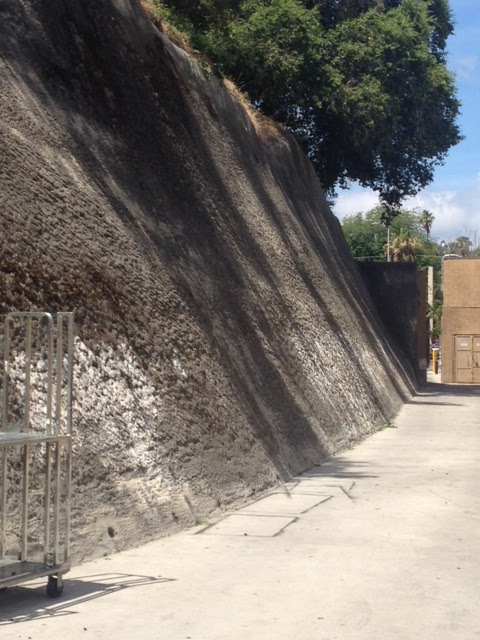
A couple of days ago, I was sitting in the shade, looking at a cool bank across the street that no one ever rides or skates. I thought of the other spots I know of in the San Fernando Valley, where I live now, that the BMX and skate worlds don't even know exist. The idea just popped in my head, like the ideas for tricks, zines, videos, and blogs have in years past. "Start a blog, and shoot photos and video of BMX and skate spots." The thought just popped into my head. "Tell the story of classic spots, share other people's videos of cool spots, and then go find new spots." The idea just began growing as I was sitting there. So here's The Spot Finder blog, the first step in this idea. We'll see where it goes from here. That's the story. Welcome to my next step in the action sports world. And a reason to start losing weight and get my fat ass back on a bike and skateboard again.
.JPG)
Big invert at the D.I.Y. World Championships 2018, put on by Steve Crandall of FBM Bikes and Chad at Powers Bikes in Richmond, Virginia. Rider unknown (sorry). #steveemigphotos




.JPG)


